

Fashion in 2026: AI, Resale and Return to Analog Consumption
From AI shopping agents to resale’s rapid growth, fashion in 2026 is being reshaped – alongside a growing return to analog, intentional consumption.

Can thrifters imagine a future of elbowing a robot out of the way at the Goodwill bins? Or deferring their The RealReal cart to their AI shopping agent to scour new listings on their behalf?
Bots were already a hot topic among the sneaker and concert community for giving users front-line access to scarce SKUs. In fashion, that dynamic is no longer hypothetical.
So what comes next?
Predictably, the AI shopper is one such consumer shift noted in Business of Fashion and McKinsey & Company’s “The State of Fashion 2026: When the Rules Change.” For the past decade, the organizations have partnered to analyze global consumer sentiment. This year’s edition was no different, capturing global themes like tariff turbulence and a workforce rewired, as well as consumer shifts and broader systemic forces at play in fashion.
An AI Witch Hunt
Already 53 percent of consumers cited using generative AI for shopping searches in Q2. AI adoption sits alongside other notable consumer shifts. Jewelry unit sales rose 4 percent, smart frames and wearables are projected to grow at 9 percent annually through 2028 and the well-being era continues to accelerate.
Well-being now ranks as a top daily priority for 84 percent of U.S. consumers surveyed — and 94 percent in China — underscoring how lifestyle values are increasingly shaping purchasing behavior.
Resale’s Rise
As brands pursue broader cost-cutting and margin-padding strategies across the fashion value chain, resale continues its trajectory in 2026.
Consumers, meanwhile, are unabashedly price and value conscious. From fabric quality to worker wages, shoppers are becoming more discerning. Eighty percent of shoppers cited value as a top driver of purchase. But consumer conviction is not limited to price alone: uniqueness remains a key resale driver especially among younger generations.
During a webinar last month, McKinsey senior partner and global leader of apparel, fashion and luxury Gemma D’Auria described resale’s “incredible growth trajectory.”
“As it becomes accepted and more part of brands’ strategic priorities – which we think it should – it will become even more mainstream,” continued D’ Auria. “Where do we begin? We suggest that you begin with the higher-value, more iconic items. This will differ region by region.”
That premium positioning is reflected in ThredUp’s recent black-and-white rebrand, designed to “embrace an intuitive experience that combines a confident, modern aesthetic with powerful, proprietary AI technology,” according to the company. In step with competitors, ThredUp has rolled out features including The Daily Edit, The Trend Report and AI-powered discovery tools.
Luxury Lagging?
Regional differences play out apropos across both the resale and luxury markets, the latter now facing a well-documented slowdown amid tightened discretionary spending and tariff-related uncertainty.
“Creativity and innovation is very important in China – it seems to be less important in Europe.”
Her guidance for luxury ultimately centers on a familiar but increasingly urgent principle: value proposition.
Retailers, she emphasized, must return to the fundamentals of audience listening. Emerging cohorts will define which values shape future shopping experiences — especially as technology becomes more deeply embedded in how consumers browse, buy and engage.
The Analog Retaliation
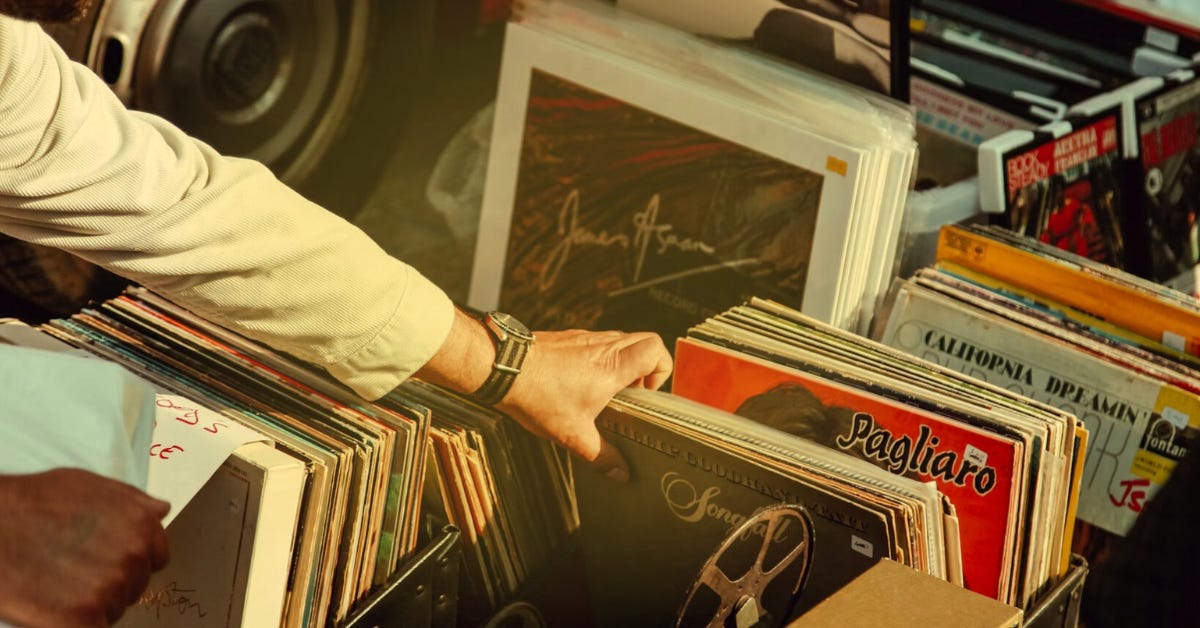
And even with AI’s supposed rapid re-write of business and commerce, some inklings of early counter-cultural consumer movements indicate a growing embrace of analog forms of media. Consumers are turning to CDs, VHS players, zines and textile crafts as a hearty unfettering of algorithmic control.
Michelle Gabriel, a lecturer on fashion at the Yale School of the Environment and Columbia University, sees this shift as a direct response to increasing digital abstraction.
“As the world is becoming less personal, more digital – there’s a return to intentionality. Look at journal culture, the rise of handmade. That is a direct response to how intangible everything feels.”
Gabriel also points to growing white-collar malaise. “Everyone hates their jobs – and feels this intense top-down pressure that wasn’t always that way.”
While career optimism still surfaces in her classrooms, Gabriel is rethinking how she engages students. At Yale, she’s been encouraged to adopt screen-free classrooms — an approach she says she’s eager to implement.
“The analog is the counter-trend, what remains to be seen is how intense is the addiction?”